Data infrastructure / open access
Public data catalog
Download the records behind the research, including market shares, concentration measures, official events, and source references. Coverage and missing values are documented for each dataset.
Source records move through market definitions, concentration calculations, confidence labels, and public data endpoints — 45 source records, 12 market profiles, 235808 record rows plus a 1 row summary endpoint across 62 API endpoints.
Record rows
235,808
Sources
45
Endpoints
62
Aug 15, 2026
Latest source review
62
Dataset families
4
Source types
Market-definition atlas
What market is this metric measuring?
Inspect each product boundary, geography, denominator, proxy choice, and permitted comparison use before treating concentration values as economic evidence.
Selected definition contract
U.S. ACA individual health insurance
Product boundary
ACA-regulated individual health insurance represented in the KFF competition dataset
Geographic boundary
United States for the canonical national profile; states and the District of Columbia remain separately reported jurisdiction screens
Measurement basis
KFF source-reported HHI, leading-insurer share, and count of insurers above 5 percent
Denominator
Enrollment represented in KFF's 2024 ACA-regulated individual-market analysis
Included
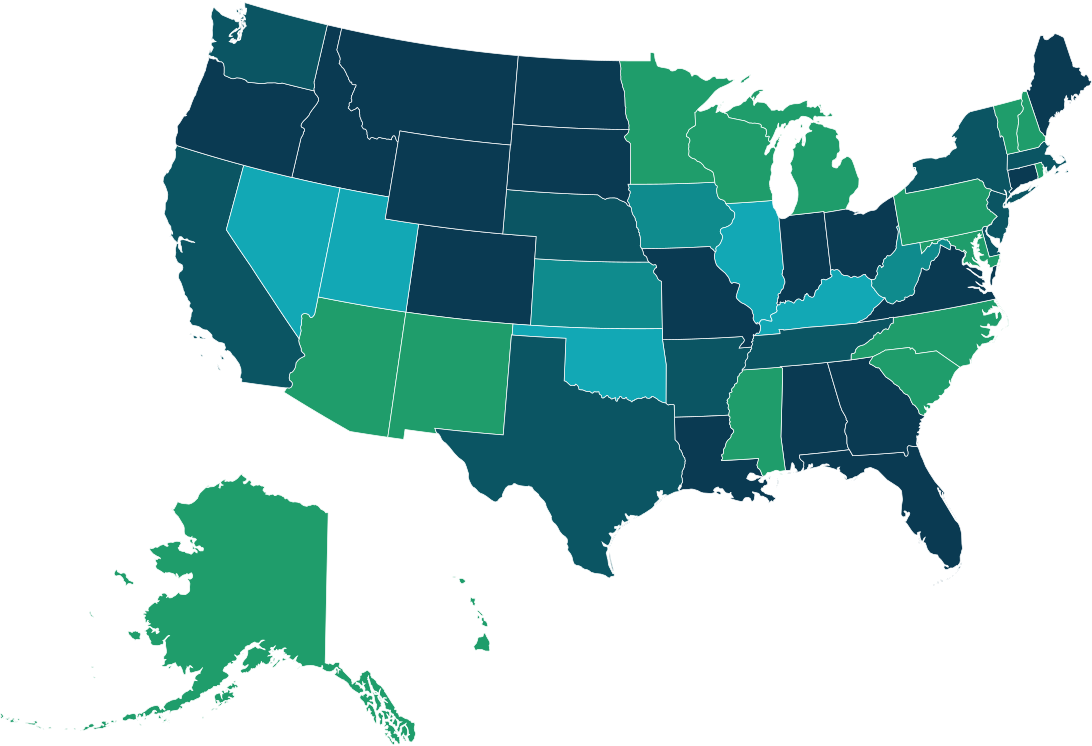
The national HHI anchor and complete 51-jurisdiction state concentration cross-section
Excluded
Employer-sponsored insurance, Medicare, Medicaid, other insurance products, insurer identities and common control, and any causal or legal conclusion
Method and limitations
Publish the source-reported national HHI as the market-profile anchor and retain every jurisdiction row in the linked state atlas with the KFF methodology note.
This is a one-year cross-section of a source-defined insurance market. Jurisdiction measures do not identify insurers, establish competitive effects, or extend to other insurance products.
Boundary source
Individual Insurance Market Competition (HHI by state)
KFF · accessed 2026-06-23
Open data needs public interpretation.
The API is a starting point, not a legal conclusion. Pair downloads with methodology notes, source records, and the data-gaps report when citing market concentration.